
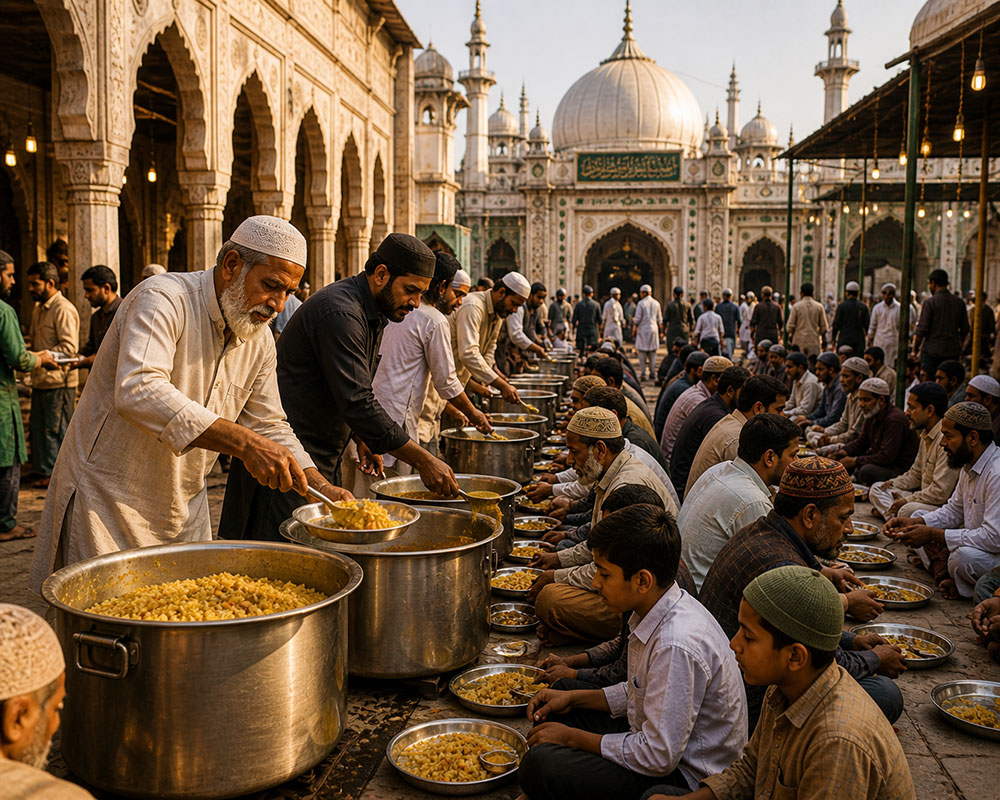
Langar, the tradition of free community meals, is one of the most beautiful expressions of compassion and service in Sufi culture. At Nizamuddin Dargah, this tradition continues to feed thousands of people every day, regardless of religion, caste, or background.
What is Langar?
Langar is a free meal served to all visitors and the needy. It represents equality, humility, and service to humanity.
Historical Origins
The tradition of Langar has deep roots in Sufi practices. Hazrat Nizamuddin Aulia emphasized feeding the hungry as one of the highest forms of worship.
Core Principles of Langar
1. Equality
Everyone sits and eats together, breaking social barriers.
2. Selfless Service
Food is prepared and served by volunteers with devotion.
3. Inclusivity
No discrimination based on religion, caste, or status.
4. Compassion
The primary goal is to serve those in need.
How Langar Operates at Nizamuddin Dargah
– Daily preparation of fresh meals
– Distribution to visitors and the poor
– Community participation and donations
– Organized management by caretakers
Impact on Society
– Reduces hunger
– Promotes unity and harmony
– Encourages charitable giving
– Strengthens community bonds
Why Langar Matters Today
In a world facing inequality and poverty, Langar serves as a powerful reminder of humanity and shared responsibility.
How You Can Support
– Donate food or funds
– Volunteer your time
– Spread awareness about charitable initiatives
Conclusion
The tradition of Langar reflects the true spirit of Sufism—love, service, and equality. Supporting this initiative helps continue a legacy that nourishes both body and soul.